17 – 20 Min Read
Key Takeaways
- Reviews aren’t an organic ranking factor, but they are a local one: they account for roughly 20% of Local Pack ranking weight, alongside relevance and distance.
- AI tools are reshaping discovery: 45% of consumers now use ChatGPT or Gemini for recommendations, up from just 6% a year ago.
- Reviews drive conversions, not just visibility: 93% of consumers have purchased after reading reviews, and 54% go on to visit the business’s own website.
- Silence costs more than a bad review: 42% of consumers say they’re unlikely to use a business that doesn’t respond to reviews.
- Self-hosted review schema won’t generate star ratings: Google blocks “self-serving” markup, so reviews still need a place on-site, just not in your structured data.
- Freshness beats volume: a steady flow of recent reviews outranks a large but stale total, for both local rankings and consumer trust.
It’s Well-Documented Google Reviews Build Trust Online
Google Reviews build trust and credibility, but whether they improve your rankings depends entirely on which “ranking factor” you mean.
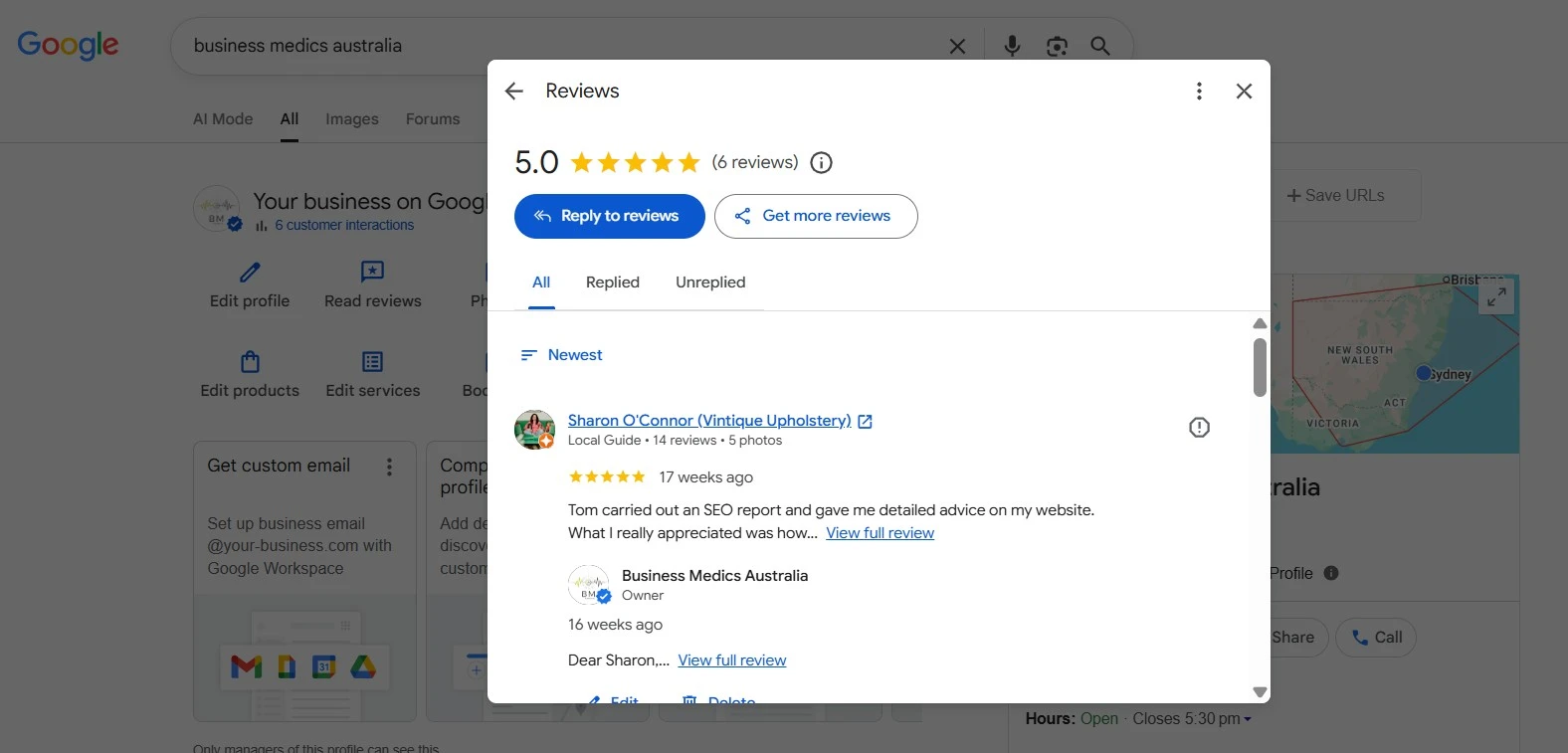
It’s common knowledge that chasing Google Reviews is time-consuming but ultimately worthwhile. They build credibility and trust among consumers looking for your services, help convert your target audiences and, above all else, make your business look good.
But have you actually stopped to ask whether Google reviews affect search engine rankings? Whether reviews improve organic visibility really comes down to which “ranking factor” you mean.
In this post, we’ll set the record straight on exactly how Google Reviews help your SEO efforts, and where they have little impact when it comes to competing for Google’s top spots.
Is Google Reviews a Ranking Factor?
No. Even if you have 500 flowing reviews in Google, it won’t directly push your website up Google’s standard organic results.

Google’s core algorithm evaluates on-page content, backlinks, technical health, page experience and how well a page matches search intent. Your Business Profile’s star rating isn’t part of that equation.
This is where things get confusing. When people say “SEO”, they often mean showing up when someone nearby searches for a business like yours. But that’s actually Google Maps and the Local Pack, not traditional SEO. Knowing the difference can save you months of wasted effort.
Do Google Reviews Affect Your Google Maps and Local Pack Ranking?
Oh yes. This is the part almost every “reviews vs SEO” debate glosses over.
Google states plainly in its own Business Profile documentation that local results are based on three things: relevance, distance and prominence. On prominence, Google’s wording is clear: “More reviews and positive ratings can help your business’s local ranking.” But, of course, this is Google, so a ‘can’ is the most you’ll get from them — and it’s slightly cryptic.
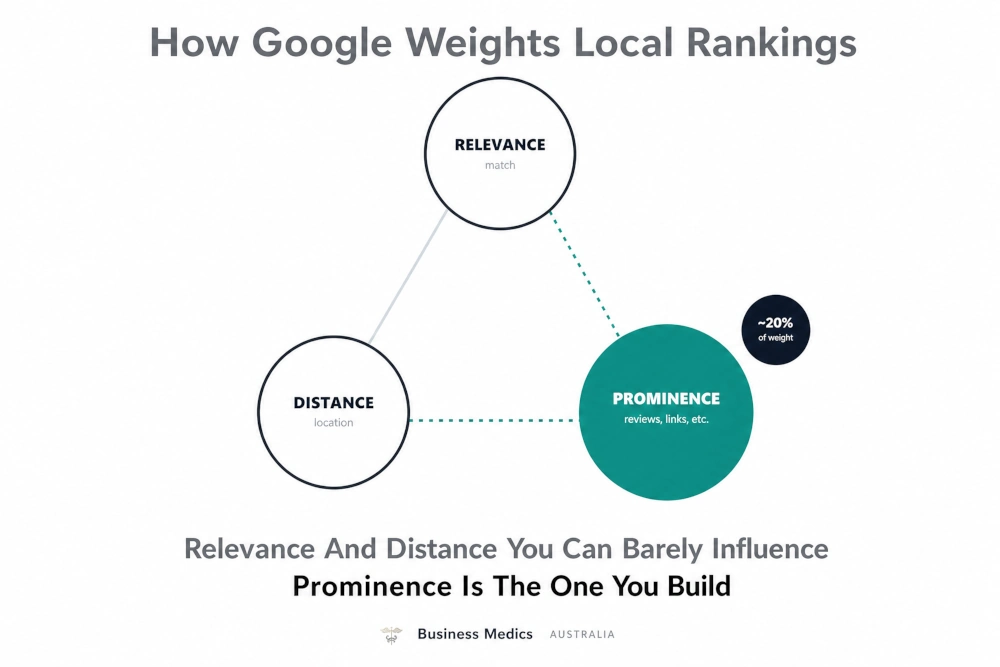
In other words, you can’t change your location, but you can win local search by accurately describing your business and consistently getting strong customer reviews.
← Scroll to see full table
How Much Do Reviews Really Weigh?
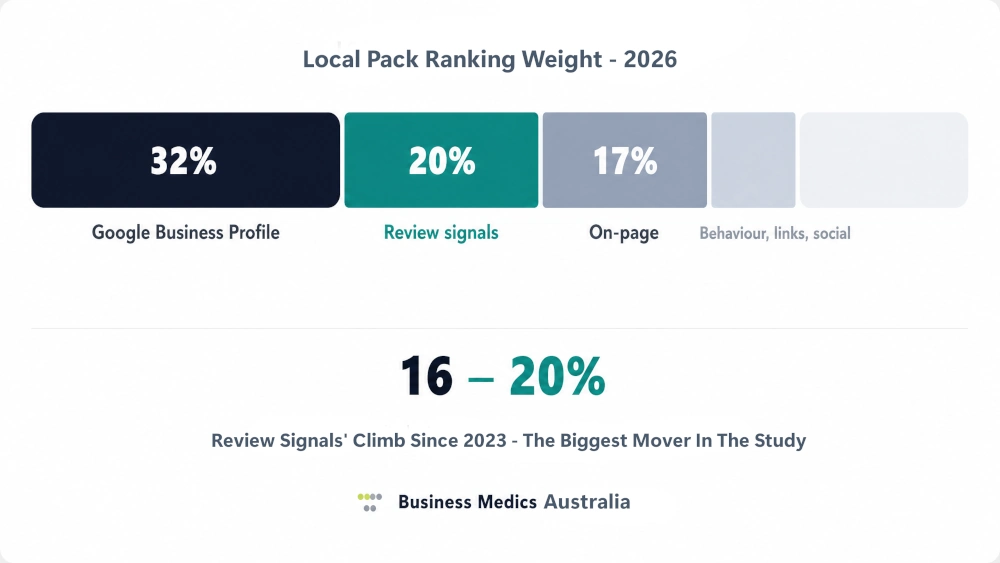
Whitespark’s 2026 Local Search Ranking Factors survey (47 local SEO specialists scoring 187 individual factors, published November 2025) puts numbers to it:
| Signal Group | Share of Local Pack Ranking Weight |
|---|---|
| Google Business Profile signals | 32% |
| Review signals | 20% |
| On-page signals | 15–19% |
| Behavioural signals | 9% |
| Link signals | 8% |
| Citation signals | 6% |
| Social signals | 5% |
← Scroll to see full table
Source: Whitespark Local Search Ranking Factors 2026
Two things stand out. First, review signals climbed from 16% to 20% between 2023 and 2026, which is one of the biggest movers in the study. Second, GBP signals and reviews together account for over half of everything you can actually influence.
One thing is worth noting though: Whitespark’s own analysis flags review recency as one of the most underrated factors, with founder Darren Shaw ranking it in his personal top five. A steady trickle of new reviews now beats a large but stale pile.
Where Reviews Make a Difference, and Where They Don’t
| Review Signal | Organic Search Impact | Local Pack / Maps Impact |
|---|---|---|
| Star rating | None | Strong – feeds prominence |
| Review volume | None | Strong – signals trust and activity |
| Review recency | None | Strong – inactive profiles lose visibility |
| Review velocity (rate of new reviews) | None | Strong – consistency beats bulk |
| Owner responses | None | Moderate – signals engagement |
| Keyword-rich review content | Indirect only | Moderate – Supports relevance matching and groups keywords from reviews together |
← Scroll to see full table
How Reviews Subtly Contribute to Organic Search
Reviews don’t feed the organic algorithm directly. But dismissing them as irrelevant to organic performance misses five real pathways:
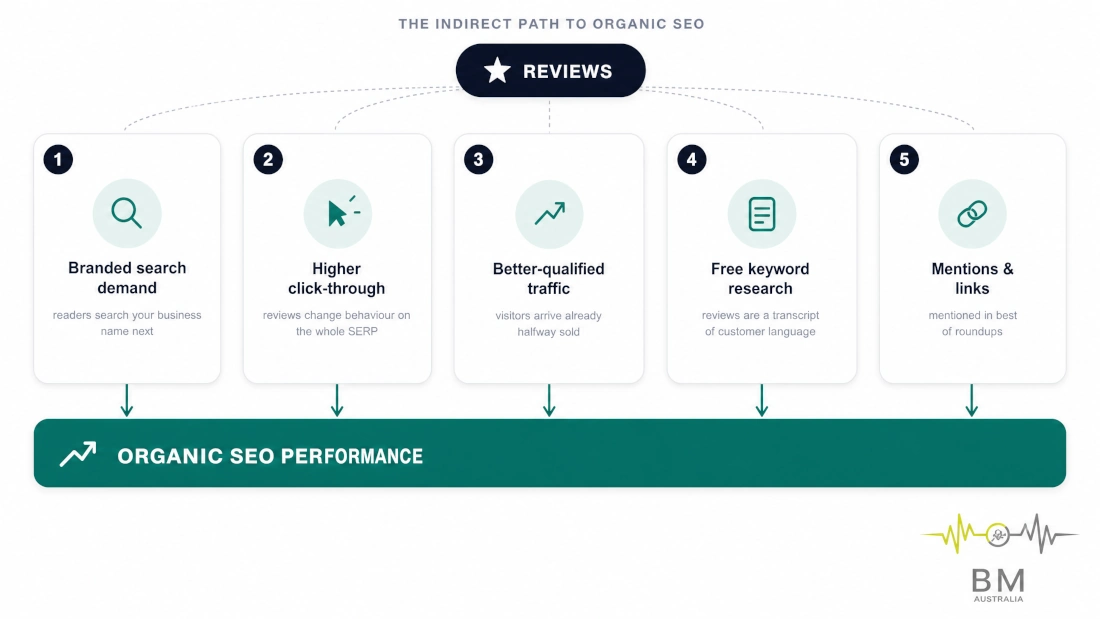
- Improved Brand Visibility: People who read your reviews often search your business name next. Branded search volume is one of the clearest trust signals a site can accumulate.
- Boosts Click-Through Rates Through Brand Recognition: A well-reviewed Business Profile sitting alongside your organic result changes click behaviour on the whole SERP, not just the map, as people trust your business more.
- Can Generate ‘Better-Qualified Traffic’ That Actually Converts: Good reviews mean customers are already sold on the quality of your goods and services. This can increase conversions and other metrics that Google uses as signals, such as lower bounce rates, better engagement rates and more key events completed – all positive signals of a page doing its job.
- Free Keyword & Messaging Research: Your reviews are a transcript of how customers describe your service in their own words. This can give you a clue on the types of phrases and search terms you should include in key landing pages.
- Citations, Mentions & Links: Businesses with strong review profiles may get shortlisted in listicles and articles such as “best [service] in [city]” roundups. Those pages are exactly what AI models reach for when answering local questions – more on that next.
As we’ve highlighted previously, building credibility takes blood, sweat and tears, but with the right local SEO services, all of the above can be managed and successfully leveraged.
Reviews Beyond Google: AI Search & Multi-Platform Visibility
Reviews and AI search: the visibility layer nobody optimised for
Here’s what most articles about review SEO are completely missing:
- BrightLocal’s Local Consumer Review Survey 2026 found that a huge 45% of consumers used AI tools like ChatGPT or Gemini to recommend businesses in the past year. This is up from just 6% the year before.
- This makes AI the third most popular source of recommendations, ahead of the old guard – Yelp and TripAdvisor.
- Over the same period, and perhaps more interestingly, Google’s share of review usage dropped from 83% to 71%.
The key takeaway from this is that when someone asks an AI assistant “best electrician in Brisbane”, the model isn’t reading your homepage copy. It’s looking for independent validation, and reviews are the strongest form of that available.
Where Reviews Are Being Read From
| Where Reviews Are Being Read (2026) | Usage Among Consumers |
|---|---|
 Google Google | 71% (down from 83% in 2025) |
| Facebook | Rising steadily |
| AI tools (ChatGPT, Gemini, etc.) | 45% (up from 6%) |
| Apple Maps | 27% (up from 14% in 2025) |
 YouTube / TikTok / Instagram YouTube / TikTok / Instagram | Growing fast |
← Scroll to see full table
Search Is Fragmented
As we highlighted in a previous blog on how AI is fragmenting organic search, your credibility becomes scrutinised from multiple sources before ultimately being recommended.
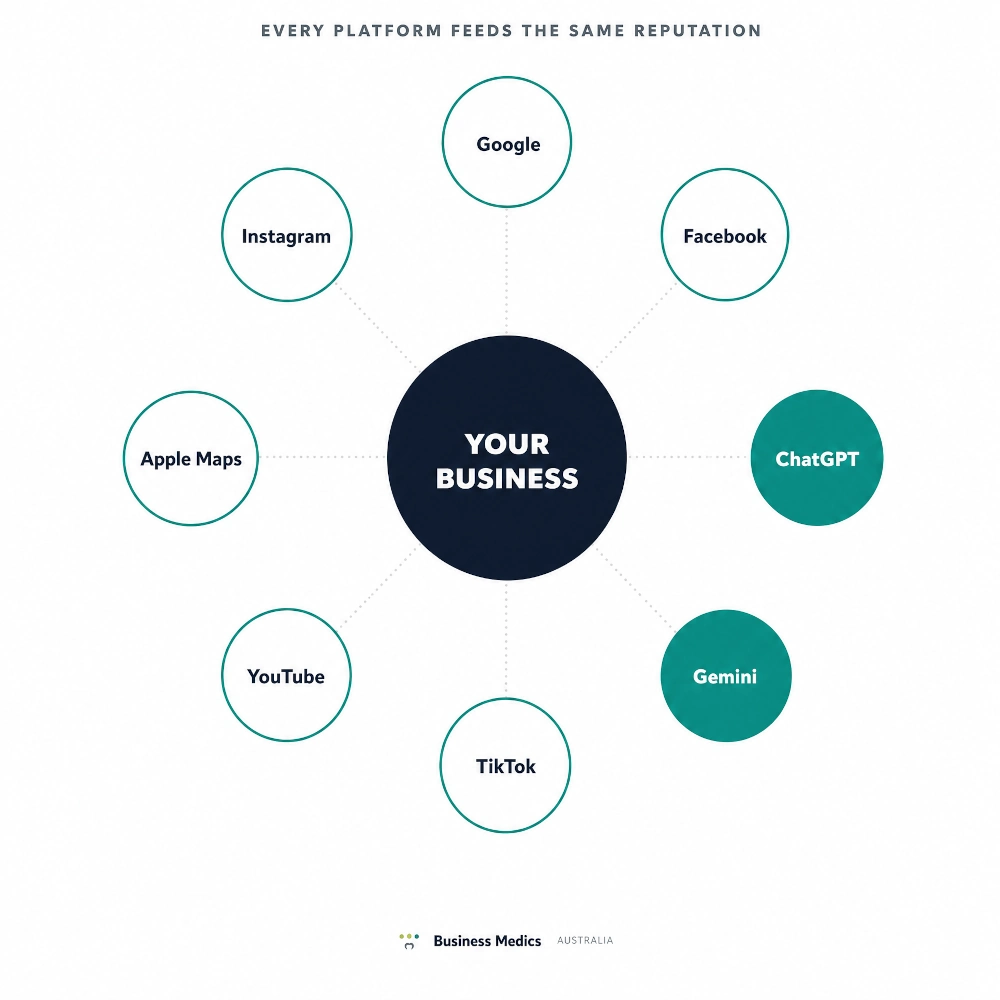
What this means: if your entire review strategy begins and ends with your Google Business Profile, you’re already behind. Diversifying where you collect and showcase reputation is quickly becoming more important than just targeting Google as a source of leads.
How to Broaden Your Review Strategy Beyond Google
AI visibility is a different game with different rules. ChatGPT doesn’t directly crawl Google Reviews. So if all your reviews live on Google, you’re potentially missing out on AI-powered recommendations across major AI search engines.
What to Do About It: Claim and actively manage profiles beyond Google. Focus on platforms with strong domain authority and high AI crawl accessibility, then secure mentions in local roundups and comparison guides where LLMs pull validation from most readily.
General & Consumer
Facebook Reviews, Trustpilot, Trustindex, WordOfMouth (WOMO), Yelp Australia
Local & Regional
ProductReview.com.au, Apple Maps
B2B, Tech & SaaS
Clutch.co, G2, Capterra
Healthcare & Niche
HealthEngine & trade-specific directories
Whitespark’s 2026 data reinforces this shift:
When measuring factors specifically for AI search visibility rather than traditional local pack rankings, on-page signals jumped to 24% while Google Business Profile signals collapsed from 32% to 12%.
Where People Actually Find and Trust Reviews Now
Google is still the frontrunner. It’s just no longer the whole picture: the average consumer now checks six different review sites before deciding.
 Google
Source: BrightLocal Local Consumer Review Survey 2026
Two lines in that table deserve attention: Apple Maps grew exponentially: largely invisible to most Australian businesses and largely uncontested. And the collapse in local news usage reflects both newspaper closures and AI summaries absorbing the traffic those sites once carried.
Video is climbing too: TikTok’s Local Explorer program is modelled directly on Google’s own Local Guides scheme, which tells you where TikTok thinks this is heading.
How Customer Reviews Drive Conversions & Indirect SEO Growth
Even if reviews do not influence organic rankings, treating them as decorative would be a mistake. Their real power shows up in behavioural factors. This is especially important when considering SEO for small businesses.
- BrightLocal’s 2026 survey found 97% of consumers read reviews for local businesses, and 41% now “always” read them when browsing. Up from 29% a year earlier. That’s a 12-point jump in twelve months.
- 93% have made an actual purchase after reading reviews, with 27% of those purchases over $1,000. But most people don’t buy the moment they finish reading: 66% go off and research further, and only 34% are ready to buy or book immediately.
- Of that research-first majority, 54% land on the business’s own website: a huge jump from 32% in 2019.
And that’s where this stops being purely a reviews story and becomes an SEO story again.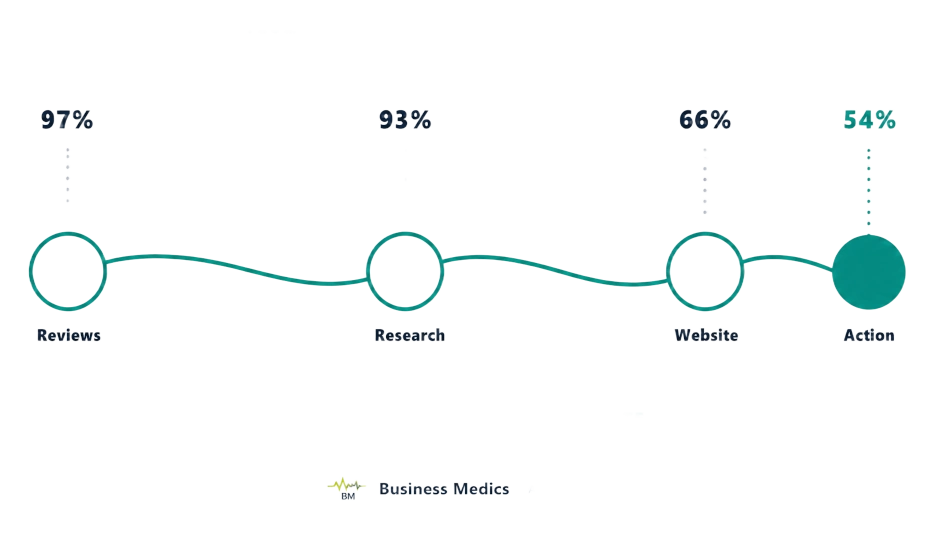
To summarise: Reviews might not directly move your rankings, but they can help bring high-intent visitors to your site which improves the quality of your traffic. What happens next – a.k.a page speed, clarity, trust signals and a clear next step – is up to you. Or, in the case of our clients, our local SEO services.
What Makes a Review Believable Enough to Act On?
Star rating expectations are also tightening sharply: Did you know that 31% of consumers now only use businesses rated 4.5 stars or above? For context, that’s nearly double the 17% who said the same the previous year!
A note on this data: BrightLocal’s Local Consumer Review Survey polls US consumers (1,002 respondents in the 2026 edition). It’s the most comprehensive longitudinal dataset available on review behaviour, and the directional trends hold in the Australian market – but treat the exact percentages as indicative rather than local. Dollar figures are USD.
Google Review Schema Rules: How to Avoid the Self-Serving Markup Trap
Putting review code on your homepage will not give you star ratings in Google search results. Google blocks businesses from displaying stars for reviews hosted on their own websites.
Why It Does Not Work
- Self-hosting is blocked: Google ignores star rating code on your site if the reviews are about your own business.
- Widgets do not help: Embedding third-party feeds (like Google or Facebook review widgets) still counts as self-serving and gets ignored.
- Pulling ratings from other sites is banned: You cannot combine ratings from external sites into your website’s code.
- Hand-picked reviews are out: You cannot cherry-pick your favourite customer testimonials and turn them into official rating code.
What This Means Practically
Put rating code on your homepage or About page. Expecting star ratings in search results here will not work.
Keep displaying reviews and testimonials on your site. They boost conversions. Google won’t penalise your site for having self-serving code — it will simply ignore the stars.
Let plugins add site-wide business rating code. It won’t trigger stars, and hiding rated content from visible page text violates Google’s visibility rules.
Place specific reviews on matching service pages. Put plumbing reviews on the plumbing page, rather than burying them all on an unvisited testimonial page.
Pull review data from other websites into your site’s code. Google explicitly bans aggregating external ratings into your markup.
Keep using basic business code. Schema for your business name, address, phone number (NAP), hours, service area, and categories is still very valuable.
Hand-pick only your top reviews for rating code. Curating or selecting only your best reviews breaks Google’s guidelines.
Use Product code for actual products. Always test it in Google’s Rich Results Test first. Note: “Service” is not an eligible type for star snippets, making service-page review markup a dead end.
Your Local Business Review Strategy: Benchmarking, Velocity & Building Momentum
How Many Google Reviews Do You Actually Need?
There’s no universal magic number, and anyone quoting one is guessing. What matters is your position relative to the businesses you’re competing with in the map pack.
Here’s the benchmarking exercise we run for clients:
- Search your primary service plus your suburb from a location near your premises.
- Record the review count and star rating of the top three map pack results.
- Calculate the gap. If the leaders sit at 180 reviews and 4.7 stars while you’re at 22 and 4.3, that’s your target – not a round number pulled from a blog post.
- Check velocity, not just totals. Sort a competitor’s reviews by newest. If they’re gaining four a week and you’re gaining one a month, total count is the wrong thing to worry about first.
- Repeat from three or four different locations across your service area. Rankings shift with distance, and so does the competitive set.
While different industries will demand different velocities, a practical target for most local service businesses is to keep new reviews coming in often enough that your most recent one is never more than a fortnight old – matching or beating the pace your top map pack competitors are setting.
Do Negative Reviews Hurt Your SEO?
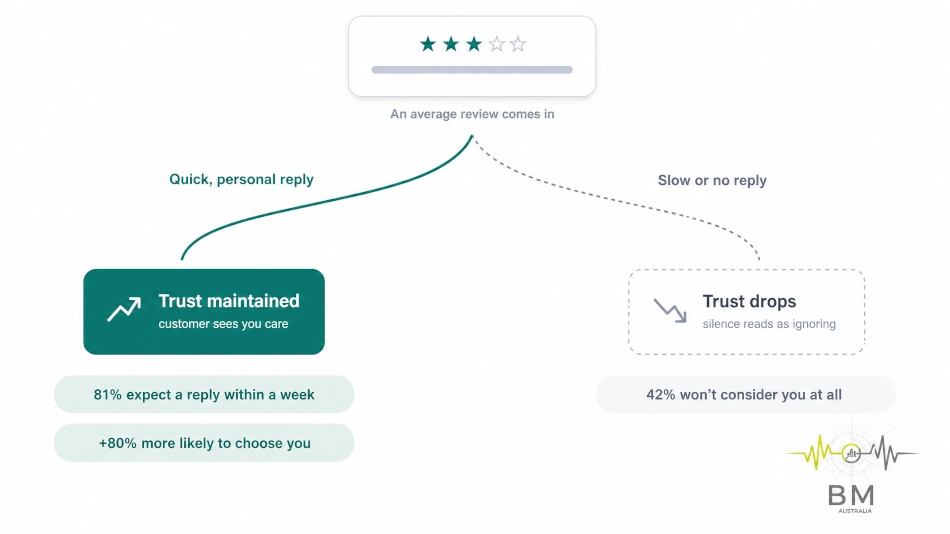
Not directly. A handful of average reviews won’t tank your organic position or your map pack ranking on their own; arguably, a review profile with a bad review or two mixed in can even look more genuine than a suspiciously perfect 5.0. What causes real damage is silence.
- 89% of consumers expect a response to reviews at all, and expectations on speed look to be rising sharply.
- 19% want a same-day reply, up from just 6% a year ago, and 81% expect to hear back within a week.
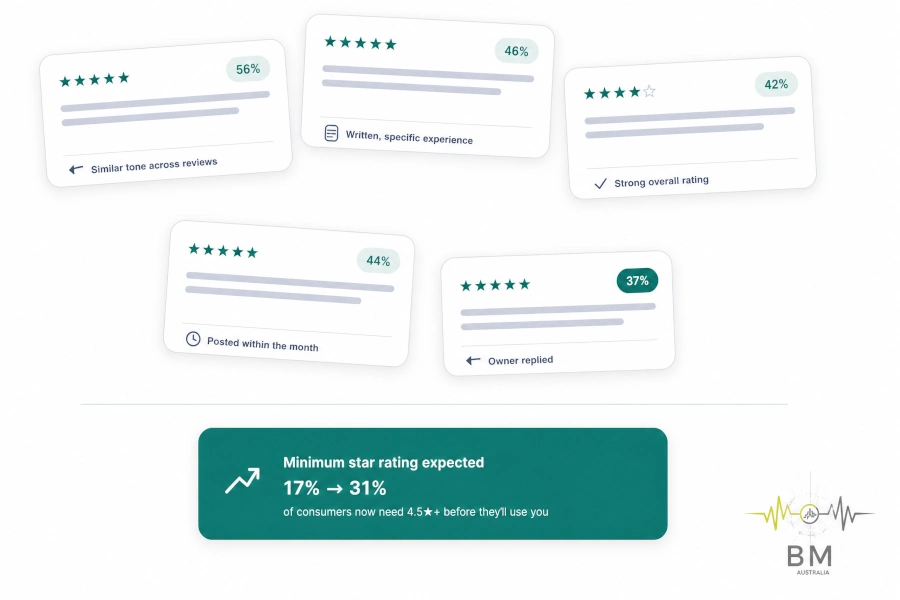
The takeaway: The review itself is rarely the real problem.
Your response, how you interact with customers and how fast it lands are what shape trust.
How to Make Reviews Work Harder for Your SEO
At its core, you’ll want to stay on top of your Google Business Profile so you stay relevant. When it comes to your reviews, look after them.
In other words, when a customer writes about a good experience, make sure you acknowledge it and thank them straight after, rather than doing it weeks later.
You’ll also want to keep your replies personalised and not generic, such as – “thanks for your feedback.” These are increasingly being seen as a red flag, so give it a human response.
Maintain freshness, as a wall of two-year-old reviews signals a business that’s gone quiet. Consistent, recent reviews also matter more than a huge historical total.
Finally, above all else, resist buying or incentivising reviews, as this is against Google’s guidelines and the system is getting very good at catching fake reviews. Consumers are also well aware that this is going on and are increasingly vocal about wanting repercussions for offenders.
Did You Know?
BrightLocal has reported that 97% of people think that businesses caught faking reviews should face real punishment, such as platform bans or even removal of their website from Google’s search results entirely.
How to Respond to Every Review (Good or Bad)
Generic replies can look lazy and may even look like you treat all customers like a number. Use these tips to improve your responses to individuals:
Measuring Review ROI, Common SEO Myths & Final Verdict
How to Measure Whether Reviews Are Working
If you can’t see the effect, you can’t defend the effort. Track these:
📍
📊
🔗
⏱️
💬
🔍
🤖
The Verdict: Do Google Reviews Help SEO?
Positive Google Reviews are not a silver bullet that pushes your website to position one in search engine results pages. The algorithm relies on hundreds of signals, but at its core, focusing on quality content, quality links and keeping your website’s technical health at an optimum level is what will still do the heavy lifting.
To clarify, within Google Maps itself, reviews are a confirmed ranking factor in Local Pack rankings, accounting for roughly a fifth of local ranking weight. This puts your business directly in front of people already looking to buy and influences whether an AI assistant recommends you.
In 2026, the businesses winning local search won’t necessarily have the most reviews. They’ll have the freshest reviews, the strongest responses, and the most credible presence across the web.
Get Extra Help For Your Business
Not sure where your rankings currently stand?
Get in touch with the Business Medics team for a free SEO consultation.
We’ll benchmark your review profile against the businesses outranking you and show you exactly what the gap costs.

Frequently asked questions
Do Google Reviews help SEO?
Not Google’s core algorithm. They do help you rank better in Google Maps and its Local Pack. As we mentioned, review signals account for roughly 20% of its ranking weight, and they are increasingly influencing whether AI tools recommend your business.
Is the number of Google Reviews a ranking factor?
Yes, for local results. Google’s own documentation confirms that review count and rating feed into prominence, one of the three factors determining local rankings. It is not a factor for standard organic rankings.
How quickly do reviews affect rankings?
There’s no fixed timeline. Review signals appear to work cumulatively rather than instantly. A consistent flow over several months moves local rankings far more reliably than a sudden burst.
Do review responses help SEO?
Indirectly. Google recommends responding, and response behaviour is treated as an engagement signal in the local algorithm. The larger effect is on conversion: 42% of consumers say they’re unlikely to use a business that doesn’t respond.
Do negative reviews hurt Google rankings?
Not on their own. A rating that drops well below your local competitors can affect prominence over time, but individual negative reviews don’t cause ranking damage. Not responding does more harm than the review itself.
Can I remove a bad Google review?
Only if it breaches Google’s review policies. Think of spam, incorrect statements, conflicts of interest, or reviews from someone who was never a customer. You flag it through your Business Profile. You cannot remove a review simply for being negative or selectively suppressing negative feedback.
Should I put Google Reviews on my website?
Yes, for conversion and credibility reasons. Displaying reviews builds trust. But LocalBusiness review markup won’t generate star ratings in Google’s organic results anymore, as it is considered ‘self-serving’.
Do reviews on other platforms help my Google ranking?
Third-party reviews contribute to prominence as part of your wider web presence, and they matter increasingly as citations for AI search platforms like Gemini, ChatGPT and Perplexity. For local pack ranking specifically, Google Reviews carry the most weight.
Is it illegal to pay for reviews in Australia?
Paying for fake reviews is misleading conduct under the Australian Consumer Law and has attracted multi-million dollar penalties. Incentives for genuine reviews are permitted only if offered regardless of sentiment and clearly disclosed.
Do reviews help my business appear in ChatGPT?
They can. AI agents look for independent validation, and reviews are the most available form of it. But the routing matters; ChatGPT doesn’t read Google Reviews directly, so businesses relying solely on their Google Business Profile may be invisible to it.
How can I start fixing my reviews and local presence?
We’re experts in local SEO strategy, including reviews, local listings and Google Business Profile optimisation. Our services are designed to help businesses in a wide range of industries, from chiropractors, accountants and plumbers, to name a few. Get in touch with us today so we can help you build a stronger local presence that gets you found, trusted and chosen.
References
- [1] Tips to improve your local ranking on Google – Google Business Profile Help
- [2] Review snippet (Review, AggregateRating) structured data & Making Review Rich Results more helpful (2019) – Google Search Central
- [3] Local Search Ranking Factors 2026 – Whitespark (Darren Shaw; 47 experts, 187 factors; published November 2025)
- [4] Local Consumer Review Survey 2026 – BrightLocal (Rosie Murphy; 1,002 US adult consumers via SurveyMonkey; published February 2026)
- [5] Online reviews for products and services & Social media promotions – Australian Competition and Consumer Commission
- [6] ACCC enforcement outcomes: Meriton (2017), HealthEngine, Service Seeking
About the Author: Tom Walker
Tom Walker is an SEO consultant in Sydney and the owner of Business Medics Australia. With over 15 years of experience, Tom has been heavily involved in SEO campaigns for leading brands globally.
Before launching Business Medics, Tom built up his expertise at established agencies in the UK and Australia. Today, he leverages his wealth of knowledge to help small and medium-sized businesses grow online through transparent, thought-led SEO strategies.