
First Published: March 2026 | Read Time: 13 min | Covers: The SEO Management Cycle • Why Businesses Invest in SEO • Key 2026 Statistics • On‑Page, Technical & Off‑Page Strategies • AI Search Visibility • Australian Pricing & Considerations
Table of Contents
What Is SEO Management?
SEO management is the continual process of planning and implementing on-page and off-page search engine optimisation strategies to maintain or improve a website’s online visibility — not just in search engines but also AI platforms. This can be carried out by agencies, consultants and VAs whose main role is to ensure that client sites:
- Stay ahead of competitors
- Stay up to date with the latest changes in search engine algorithms
- Continue to drive sustainable growth without having to rely on Google Ads
Whether you’re planning to manage SEO in-house, through an SEO agency, or through an SEO consultant, building traction through organic channels requires hard work, dedication and constant research to keep ahead of the times.
Why Businesses Need Help Managing Their SEO
The reason is different for all. Some business owners have time constraints, while others simply need the expertise because of an overly competitive industry – the reasons run into the hundreds.
Typically (and in our experience), the following scenarios are accurate for why businesses still value good search engine optimisation management services so highly:

- Expertise in Ever-Evolving Algorithms: To stay relevant online, businesses have to continue staying on top of all the latest changes that Google’s search engine throws at you – something a dedicated SEO consultant or agency keeps a constant eye on.
- Ensuring That Organic Traffic Actually Converts: It’s one thing to drive traffic, it’s another thing to ensure it’s ‘qualified traffic’. This requires identifying the right search terms for your copy and fine-tuning it to reach customers actively looking for your products or services.
- Better User Experience – It’s Not All About Search Engines: Good SEO isn’t just about pleasing Google; it’s the user that is where the money is after all. Managed SEO services also look at usability, page load speeds, navigation and structure. All these elements help drive more business goals and build and grow brand awareness.
- Ensuring That It’s The Gift That Keeps On Giving: We all know that PPC (Pay-Per-Click) ads can be expensive and only last as long as you’re paying for them. SEO works differently, providing a steady flow of new traffic that builds up over time — but only with consistent SEO campaign management keeping things on track.
- Staying Ahead of the Competition: If your rivals are dominating the first page, they’re getting all the clicks. We take a close look at what they’re doing and develop SEO strategies that let you outrank them.
Statistics You Should Need To Know About SEO In 2026
- Google still holds 85-90% of global search market share.
- Organic search results are fiercely competitive with zero-click searches now accounting for nearly 60% of all queries, though the traffic that remains is increasingly concentrated at the very top of page one.
- 57-60% of Google searches end without a click to the web (thanks to AI Overviews).
- AI Overviews appears in roughly 13-25% of searches and when they do, position #1 clickthrough rates can drop by as much as 58% according to a recent Ahrefs study.
- Despite all the noise around Core Web Vitals, only 33% of websites have passed its threshold tests.
What Does SEO Campaign Management Actually Look Like?

Managing SEO effectively requires hard work and adopting a holistic strategy that is not only effective in ranking in search engine algorithms but is also sustainable.
It’s not just about ticking boxes; it’s about following a structured process while at the same time analysing what is currently working.
Here’s what a robust management cycle typically looks like:
The Research Phase
1. The Foundation: Audit & Benchmarking
The old saying goes “you don’t know what you don’t know”, and this is fundamental to any organic marketing strategy for a business.
Any new SEO campaign always starts with a thorough website audit/health check to uncover any cracks. This considers many aspects of a website, including:
- Benchmarking current traffic
- Historical performance in search engines
- Current keyword rankings and overall technical health
In its summary at the end, it should be able to answer the business owner – “What’s working, and what’s not?”
2. Analysing The Competitive Landscape

Following the technical audit, more research should be done to understand the industry itself. For example:
- How competitive is it?
- Who are the dominant players, and what is their authority?
- Where are the gaps and opportunities?
Getting a feel for the competitiveness of the industry helps you better understand how the market operates and what competitors are doing to rank at the top of the search engines. This provides priceless information on how to form a strategy to reverse engineer other websites’ successes.
3. Identify What People Are Searching For

This is where the rubber meets the road. Keyword research is arguably one of the most important documents when managing somebody’s SEO retainer.
Not only does it inform the rest of the campaign, but it also provides clues and information on which search terms and terminology people are using in search engines — all of which need to be considered when optimising content.
According to a study from Ahrefs, over 75% of marketers still use keyword research for content creation, which shows how important this step is.
The Implementation Phase: Working Within A Website
1. The Core: Strategy & Devising Content With Purpose

On-page SEO in 2026 continues to be a critical component of any website’s success online, as both traditional and AI-driven search engines now prioritise semantic understanding, user intent, and the quality of the copy over simply peppering keywords into a page.
Whether your copy is transactional or informational by nature, on-page SEO must be written in a way that is interpretable for AI summaries and engaging enough to satisfy user experience signals, both of which drive improved rankings.
In fact, according to a study by Backlinko, on-page elements such as title tags, H1s, content quality and page experience are consistently among Google’s most significant ranking signals – making well-structured, user-focused copy essential to any campaign.
2. Technical Optimisations: Getting the Foundations Right

Technical SEO continues to play an important role in making a website’s foundations and infrastructure provide a good user experience while making it as easy as possible for search engines to crawl, index and render pages. It typically falls into the following types:
- Accessibility: Ensures users and search engines can easily access your site (Sitemaps, Robots.txt)
- Crawlability: Allows Google to easily discover and travel across your pages
- Indexability: Makes website pages eligible to appear in search results (nothing is blocking them, such as noindex tags)
- Site Speed & Core Web Vitals: Ensuring fast loading speeds while satisfying Google’s performance metrics: LCP (Largest Contentful Paint), INP (Interaction to Next Paint), and CLS (Cumulative Layout Shift)
- Structured Data & Schema Markup: Helps search engines better understand your content
These types of jobs are typically handled by a more technical SEO specialist who has experience or a particular interest in this area.
External Signals Phase: SEO Management Outside A Website
1. Building Trust And Credibility

Google doesn’t just take the word of a business that they are an expert in their field. They look further than this by taking trust signals into consideration from other reputable sources. This is where backlinks, or external links, play a vital part in the management of an SEO campaign.
At the time of writing this blog post, links remain a ranking factor for SEO in 2026. While they may not be as important as previously thought in terms of how they impact Google’s ranking algorithms, a few key things need to be remembered:
- It’s quality over quantity: Fewer high-quality links will always outperform lower-quality or generic links.
- They still count as a vote of confidence: Google continues to use links as a consideration signal to position websites in its search results.
- Link acquisition remains a challenge: Prospecting is harder than ever as webmasters have developed greater awareness of link-building strategies and their value.
2. Beyond Google: AI Search Visibility
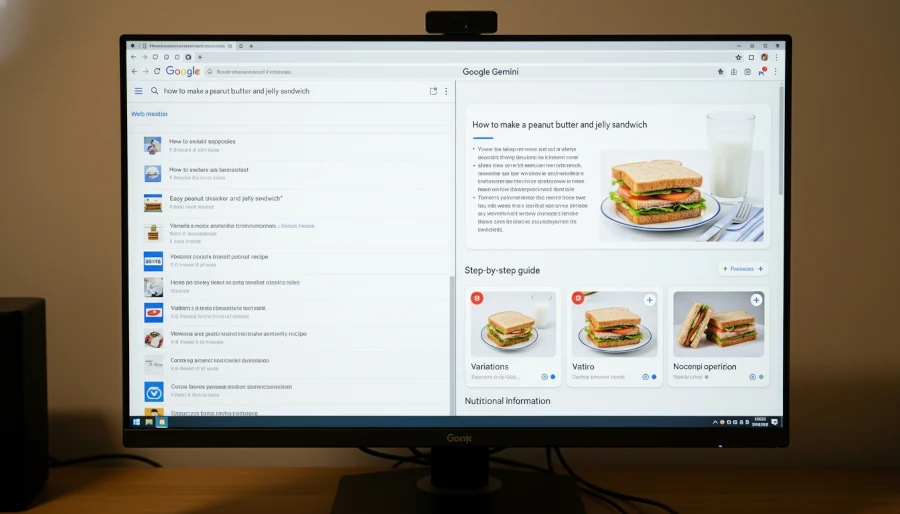
While traditional search is still highly relevant, AI tools such as ChatGPT and Claude now have a higher user pool than before, with roughly 30% of all consumers using AI platforms over traditional search methods. Despite this, Google still holds just over 90% of the search market share, making it surprisingly resilient.
Australia now has one of the highest AI search adoption rates in the world. For SEO’s, tapping into this requires authoritative and well-structured content, the kind that AI engines draw from when generating answers.
The good news is that the same content quality signals that rank well on Google also influence your visibility in AI search, making both goals more complementary than they are separate.
While there is a clear split in the way users now search for things in 2026, successful SEO management factors both channels as part of a modern strategy.
The Accountability Phase: Measuring Success
1. Reporting
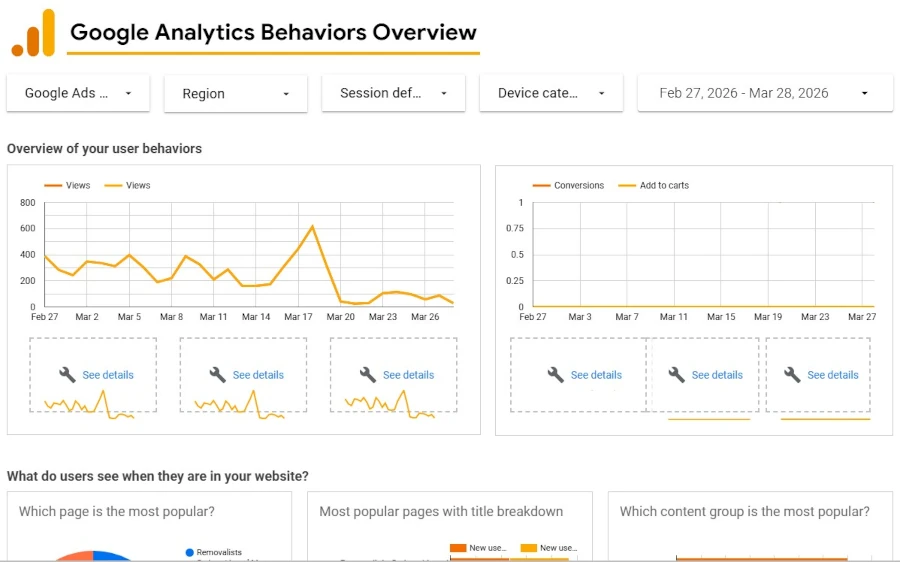
Reporting is vital to any successful SEO management. Through insightful reporting, businesses can effectively measure the success of a campaign through key metrics such as organic clicks, impressions, engagement rates and overall website growth over time.
This also allows a business to gauge whether key performance indicators have been met, or whether a strategy needs to be re-evaluated.
2. Third Party Tools

Using data from multiple sources provides a richer picture in order to make informed decisions. Some of these tools include:
- Heatmaps: These offer a visual representation of user behaviour and how they interact with your site.
- Rank Trackers: Allowing you to monitor keyword positions over time — these have become admittedly less useful thanks to Google removing the
#num=100parameter (which allowed these tools to fetch 100 results in one request). - Analytics Platforms (Google Analytics 4): Google’s out-of-the-box tool for measuring traffic, user behaviour and conversions.
A Side-by-Side Comparison: On-Page vs Off-Page?
SEO management is typically broken up into two main parts: off-site and on-site campaign management. Here’s a clear side-by-side breakdown:
Managed SEO On-Page
This involves working on the website itself, making changes to help web pages appear at the top of search engines for targeted terms.
This type of SEO is an ongoing process where content is continuously tweaked for the best performance. Aside from content, Technical SEO is also associated with on-page optimisation, although the person making updates varies from a web developer to an SEO expert with a technical background.
Common On-Page Tasks
- Keyword research
- Internal link sculpting
- URL structure optimisation
- Image optimisation
- Internal linking improvements
- Optimising metadata
- Quality content creation
- Schema Markup (structured data)
- Content enrichment
Off-Page SEO Management
Off-site SEO, or authority building, is vital as it remains one of Google’s confirmed ranking factors and is primarily done through link building to earn trust with search engines like Google or Bing.
There has also often been debate over whether social media is an external ranking factor. While it won’t directly influence rankings, staying active on social platforms helps show your brand is active.
Common Off-Page Tasks
- Guest posting
- Backlink building
- Brand mention link building
- NAP link building (important for local SEO)
- Press releases
- Digital PR
- Competitor backlink analysis
How Much Does SEO Management Cost in Australia?
 Ongoing retainer-based SEO management in Australia: Prices typically range from $1,200 up to $10,000+ per month, depending on the scope of work and size of the website.
Project work: For jobs like technical audits or foundational SEO setup, fees fall between $3,500 and $10,000. Website sizes play a big role, which is why SEO agencies like Business Medics offer SEO packages.
Consulting: SEO consultants are also available and tend to work on an hourly basis rather than at retainer level. A reputable SEO specialist in Australia will typically charge between $150 and $300 per hour, depending on their level of experience.
Business Medics Management Fees

- Small Business SEO Services start from $1,200/month
- SEO Consulting starts at $180.00/hour
- Our Influencer SEO Package costs $2,800/month
- Our Elite SEO Package costs $2,999/month
How Much Should I Spend On Outsourced SEO Management?
There is no single ‘correct amount’ to spend on your SEO. It really depends on the goals and ambitions of a business and is a case by case decision.
A local tradie for example, who will be looking to generate leads in one suburb will have very different needs to a national e-commerce brand competing across hundreds of product categories. Here are the most common reasons that may influence a business’s decision to invest in SEO management services:
- The competitive landscape of your industry
- The size of your market
- The geographic area you operate in
- Whether you are a new or existing business
- Whether you want ongoing help or a one-off project
- If you’ve had SEO work completed in the past
- The size and technical complexity of your website
Careful Considerations
It’s worth being cautious about going too cheaply. Platforms like Fiverr have become synonymous for low prices and overly cheap SEO offerings – but the reality is that these services can do more harm than good.
Overly cheap SEO often involves the agency or consultant taking shortcuts such as utilising spammy backlink tactics or article spinning techniques that can trigger Google devaluations or worse still, penalties.
This can cause negative rankings drops and take months (sometimes longer) to recover from.
The moral of the story is — the cost of cleaning up after bad SEO almost always outweighs what was “saved” in the first place.
Final Thoughts On SEO Management Services
SEO is a serious, long-term investment. There is no way to cheat the system, not without potential repercussions.
Results are rarely immediate, and it can take up to three to six months before meaningful traction begins to build.
On the flip side, when it’s done properly by a reputable provider, your organic traffic can become one of the most sustainable revenue streams for your business while continuing to deliver good returns long after the initial groundwork has been laid.
About the Author: Tom Walker
Tom Walker is an SEO consultant in Sydney and the owner of Business Medics Australia. With over 15 years of experience, Tom has been heavily involved in SEO campaigns for leading brands globally.
Before launching Business Medics, Tom built up his expertise at established agencies in the UK and Australia. Today, he leverages his wealth of knowledge to help small and medium-sized businesses grow online through transparent, thought-led SEO strategies.